


Lets take a look at some frequently asked questions about Pipe
Offshore Oil/Gas Pipelines are continuously transporting large quantities of oil (gas) through enclosed pipelines on the seafloor. They are a major component of offshore oil (gas) field development and production systems, and also the fastest, safest and most economically reliable means of offshore oil and gas transportation currently. The advantages of subsea pipelines are that they can transport continuously, almost unaffected by environmental conditions, without forcing oil fields to reduce or stop production due to capacity limitations of offshore storage facilities or delays in shuttle tanker transport. Therefore, oil transmission efficiency is high and oil carrying capacity is large. In addition, Offshore Oil/Gas Pipelines have short construction periods, fast commissioning, convenient management and low operating costs.pipes are usually used for API 5L PSL2 Grade x52Q seamless pipe,API 5L PSL2 x52M welded pipe,x65M,x65Q ect.
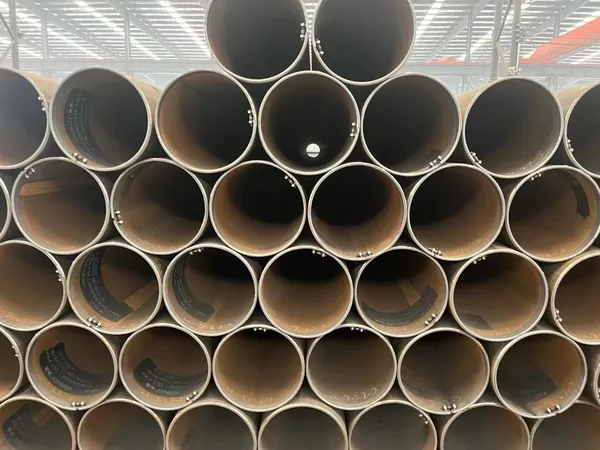
Onshore oil and gas pipelines are used to transport oil and petroleum products pipeline system, mainly through the oil pipeline, oil transmission station and other auxiliary equipment, is one of the most important equipment in the petroleum storage and transportation industry, but also crude oil and petroleum products is the most important transportation equipment, and belongs to the same land transportation mode of railways and highways compared to the oil pipeline, oil pipeline transmission has a large capacity, good containment, low cost and high safety coefficient characteristics. The pipe material of oil pipeline is generally steel pipe, using welding and flanges and other connecting devices to connect the pipeline over long distances, and the use of valves for opening and closing control and flow regulation. Oil pipeline mainly has isothermal transportation, heating transportation and sequential transportation and other transportation processes. Pipeline corrosion and how to prevent corrosion is one of the important aspects of pipeline maintenance.usual use API 5L PSL2 grade x60Q,x60M ect.
- Strength and durability: They are stronger and more resilient, making them suitable for demanding applications.
- Heat resistance: They can withstand much higher temperatures, making them ideal for high-heat environments like boilers.
- Corrosion resistance: The inclusion of alloying elements like chromium and nickel provides enhanced resistance to rust and corrosion.
- Cost-effectiveness: While initially more expensive, their longer lifespan and lower maintenance reduce overall costs.
- Oil & gas
- Power generation
- Chemical processing
- Boiler and furnace applications
- Cost: They are more expensive to produce than carbon steel pipes.
- Weldability: They are more difficult to weld compared to carbon steel.
- Embrittlement: Some alloys can become susceptible to embrittlement at high temperatures over time.
- For pipe: P1, P5, P9, P11
- For wrought products: WP1, WP5
- For forged fittings: F21, F5, F9, F11
- For high-strength applications: P91
- Conduct regular inspections, ideally annually, and more frequently in harsh environments.
- Perform regular cleaning to prevent corrosion caused by moisture and chemicals.
- Consider using protective coatings or cathodic protection systems to extend their life.
The city gas pipeline system refers to the infrastructure within a city for delivering natural gas and other gaseous fuels to end-users through a network of pipelines. It typically consists of distribution stations, a pipeline network, pressure regulating stations, external equipment, and end-users.
Welded pipes are commonly used in the field of petroleum refining for the transportation of crude oil, refined oil products, chemical raw materials and products, supporting structures and connecting structures. Our products can meet the requirements of the construction of oil refining projects and the construction of gas pipelines.
Offshore oil platforms, or offshore drilling rigs, are large offshore structures that are typically used to accommodate the personnel and mechanical equipment required for drilling wells or extracting oil and natural gas. Depending on the environment, platforms are usually anchored to the seabed or floating. Typically, offshore platforms are situated on the continental shelf, but as technology progresses and land-based resources continue to dwindle, deep sea drilling has become feasible and profitable. As a result, more and more offshore engineering platforms are emerging.
Welded pipe piles have a wide range of applications in the construction of port terminals, mainly used for supporting dock structures, building breakwaters and shore protection. In terms of quay structure bearing, welded pipe piles are the main bearing material for quay platform, trestle bridge, berth and other structures, with high strength and rigidity, which can meet the requirements of quay structure bearing. In the construction of breakwater and shore protection, welded pipe piles have high strength and corrosion resistance, and can meet the requirements of breakwater and shore protection. The application of welded pipe piles in the construction of port terminal provides an important guarantee for the construction and development of port terminal.the pipe piles of our factory can meet these technical requirements.
Specification
Outside Diameter:Φ406mm – 1626mm (16“ – 64″)
Wall Thickness:6.0 – 75mm (1/4“ – 3″)
Quality Standards:API, DNV, ISO, DEP, EN, ASTM, DIN, BS, GB, CSA
Length:6.0 -12.5m (20’ – 41′)
Grades:API 5L A-X100, GB/T9711 L190-L690
Production Line
Industry standards are crucial in ensuring the safety, quality, and performance of both welded and seamless pipes. These standards dictate the manufacturing processes, materials used, and testing procedures. Adhering to these standards is vital for choosing the right type of pipe for specific applications, ensuring they meet the required safety and performance criteria.
alloy steel is what it sounds like: Steel that includes specified amounts of alloying elements. Generally, alloying elements make steel stronger and more resistant to impact or stress. While the most common alloying elements include nickel, chromium, molybdenum, manganese, silicon and copper, many others are used in steel production.
There are countless combinations of alloys and concentrations in use in industry, with each combination designed to achieve specific qualities.
High-alloy is favored in the piping industry for service in extreme conditions,whether it be in hot or cold conditions or subject to rough use. That’s because the combination of chemistry and proper heat treating can yield strong yet ductile pipe that can take a beating. The oil & gas and power generation industries often favor alloy pipe due to its toughness.
Alloying elements also impart increased corrosion resistance to steel pipe. that makes it a leading choice for chemical companies as well.